


Fire Damage Remediation: Expert 2026 Guide
Why Fire Damage Remediation is More Than Just Cleaning Up Ash
Fire damage remediation is the comprehensive process of restoring a property after a fire. It addresses visible burn damage and hidden threats like smoke residue, soot, water damage from firefighting, and structural issues. The process involves inspection, water extraction, soot removal, cleaning, deodorization, and reconstruction, all coordinated with your insurance provider.
Key Steps in Fire Damage Remediation:
- Emergency Response – Secure the property with board-up and tarping services
- Assessment – Inspect for fire, smoke, soot, and water damage
- Water Removal – Extract water used by firefighters and dry affected areas
- Soot & Smoke Cleaning – Remove corrosive residues from all surfaces
- Deodorization – Eliminate lingering smoke odors using specialized equipment
- Restoration – Repair or rebuild damaged structures and materials
According to the National Fire Protection Association (NFPA), structure fires cause the overwhelming majority of property loss in the United States. In a single year, these fires were responsible for $14.7 billion in direct property damage—83% of the nation’s total fire-related losses.
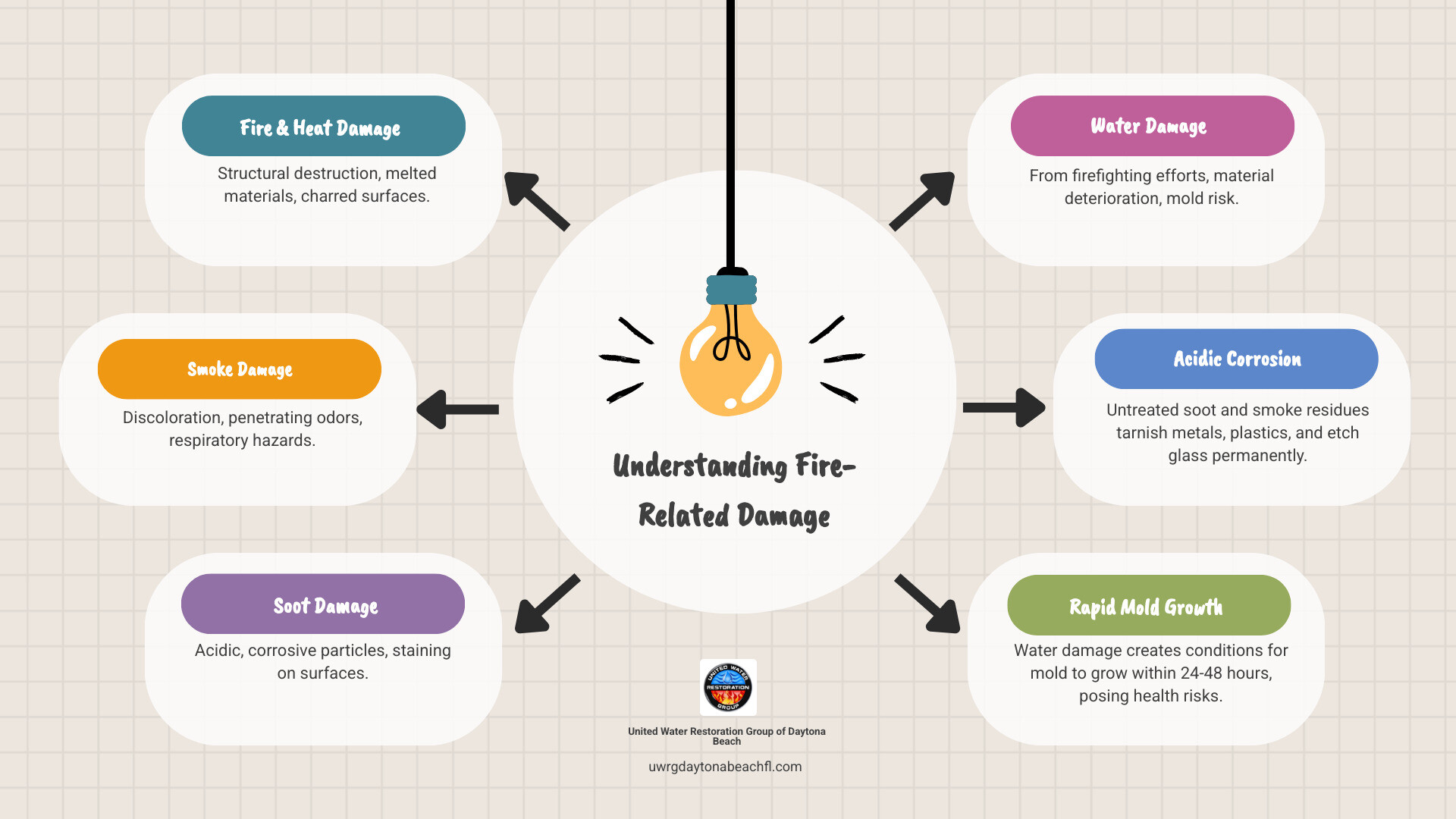
After the fire trucks leave, your property suffers from more than just burn damage. Smoke and soot travel throughout your home, settling on surfaces far from the fire’s origin. These acidic and corrosive residues can tarnish metals, discolor plastics, and etch glass within hours, causing permanent damage if left untreated.
Water damage from firefighting efforts adds another layer of complexity. Within 24–48 hours, damp conditions create the perfect environment for mold growth, bringing health risks and additional expenses.
The first 24 to 48 hours after a fire are the “golden hours” of recovery. A prompt emergency response during this window can help salvage most of your property and prevent secondary damage.
I’m Norbert Vasko. While my expertise is in digital content, I’ve worked extensively with restoration companies to create educational content about fire damage remediation. This experience has been essential in helping property owners make informed decisions during vulnerable times.
This guide will walk you through everything you need to know about fire damage remediation—from immediate safety steps to working with your insurance company and ensuring your property is truly safe for re-occupancy.
The First 48 Hours: Immediate Steps After a Fire
The moments after a fire can feel chaotic, but the actions taken within the first 24 to 48 hours—the “golden hours” of recovery—are critical for mitigating further damage. A swift response increases the chances of successful fire damage remediation. Our team at United Water Restoration Group of Daytona Beach understands this urgency and offers 24/7 response in Daytona Beach, Ormond Beach, Bunnell, Debary, Deland, Deltona, Edgewater, New Smyrna Beach, Orange City, Palm Coast, Port Orange, and Jacksonville, Florida.
Safety First: Prioritizing Well-being
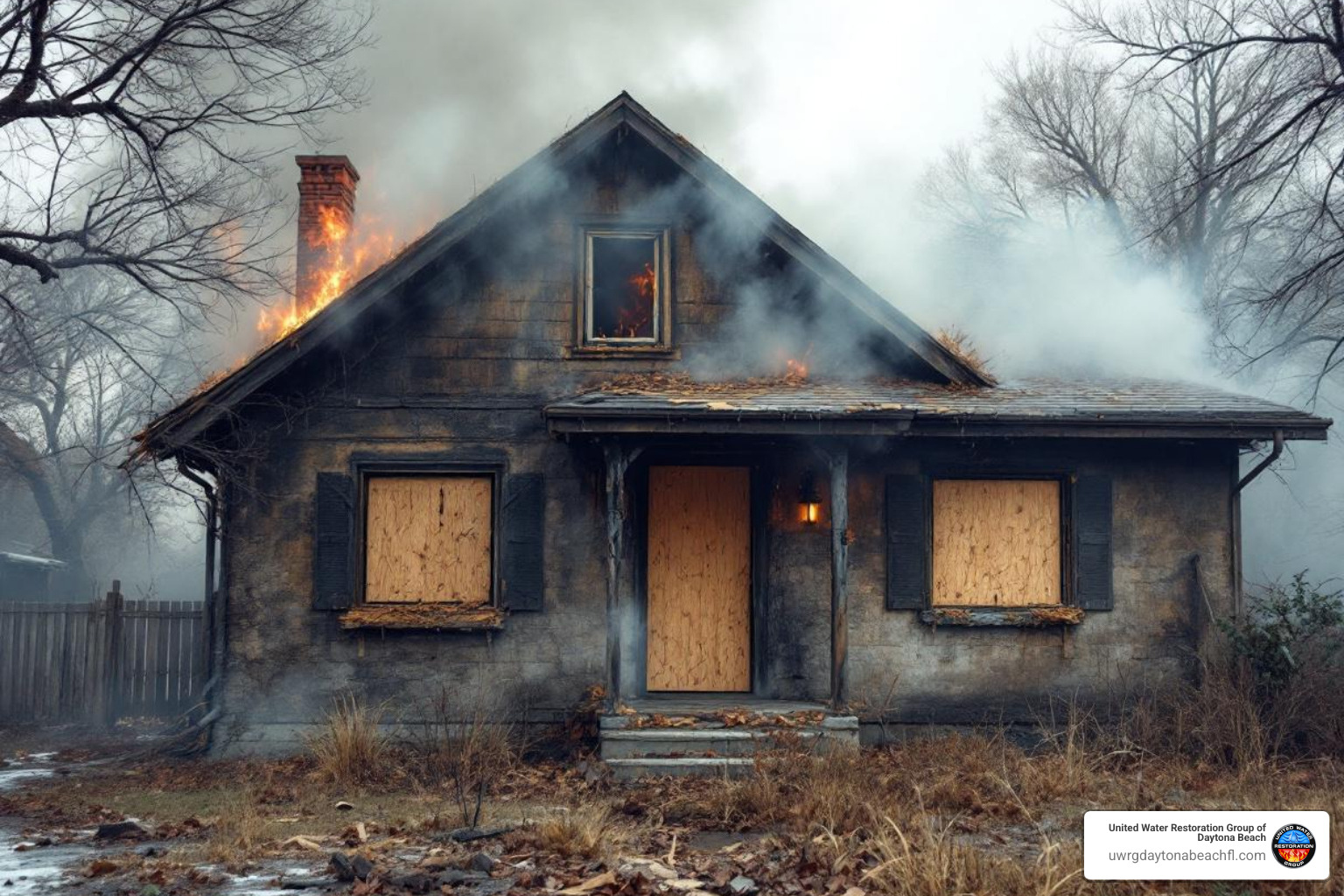
Your safety is paramount. Never re-enter a fire-damaged property until the fire department has officially deemed it safe. Firefighters may have compromised structural integrity, and utilities like electricity and gas may be unsafe. Do not attempt to turn utilities back on yourself; wait for a professional assessment.
Contacting Your Insurance Provider
After ensuring everyone is safe, call your insurance agent. They will guide you through filing a claim and can recommend reputable restoration companies. Save all receipts for any expenses related to the fire loss for your claim.
Securing the Property
Once cleared by the fire department, securing your property is vital. Fire damage can compromise windows, walls, and roofs, leaving your home vulnerable. We provide immediate emergency tarping & board up services to protect your property from the elements and unauthorized entry. If you must leave your home vacant, inform the local police department.
Limiting Activity and Avoiding DIY Cleaning
While it’s tempting to start cleaning, we strongly advise against DIY remediation. Acidic soot and smoke residues can cause permanent damage if not handled correctly. Improper cleaning can embed these residues deeper, making professional removal more difficult and costly.
Avoid consuming any food exposed to heat, smoke, or soot, and do not turn on electrical appliances until they’ve been inspected. Refrain from using carpets or furniture impacted by the fire, as these can spread contaminants.
Calling a 24/7 Professional
Damage from a fire continues for days after it is extinguished, which is why immediate professional intervention is crucial. Our 24/7 emergency response team can begin the fire damage remediation process quickly. A prompt response helps salvage more of your property and prevents secondary issues like mold growth, which can begin within 24-48 hours. By acting swiftly, we maximize the effectiveness of restoration efforts.
Understanding the Full Extent of Fire Damage
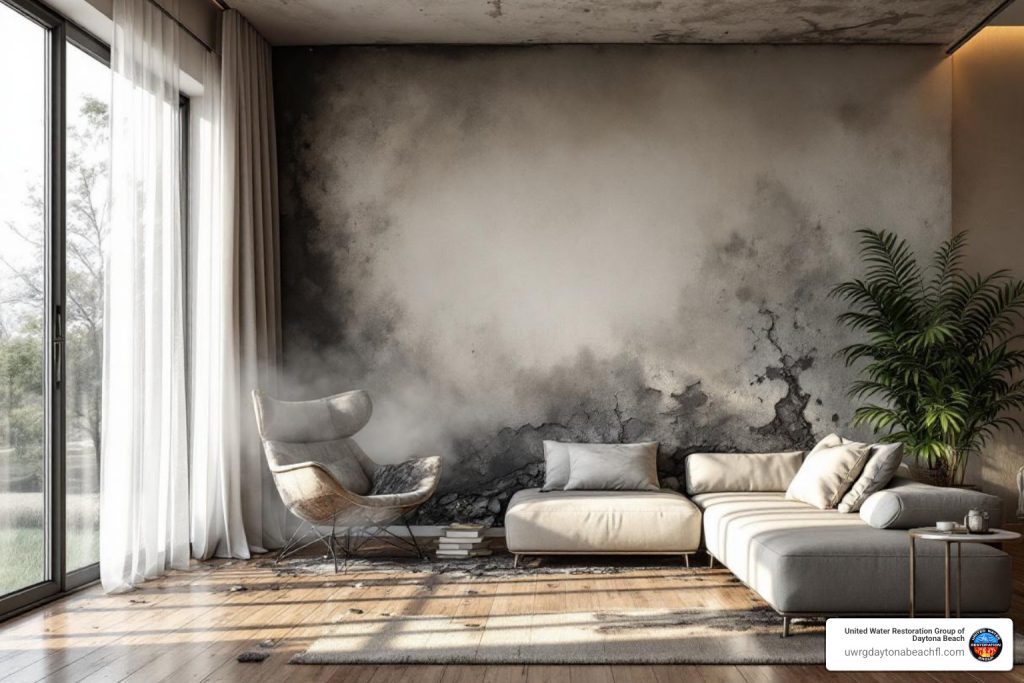
When a fire strikes, the visible charring is just the tip of the iceberg. Fire damage remediation involves addressing a complex interplay of direct fire impact, smoke, soot, and water damage—each presenting its own challenges.
Beyond the Flames: Structural Compromise and Hidden Dangers
While flames cause obvious structural damage, intense heat can also compromise materials far from the fire’s epicenter, weakening supporting beams, walls, and even the foundation. What might appear intact could be structurally unsound. This is why thorough inspections are paramount, especially for structural fire damage repair. Our experts are trained to identify these hidden structural issues, ensuring your property is safe and stable.
The Insidious Nature of Smoke and Soot
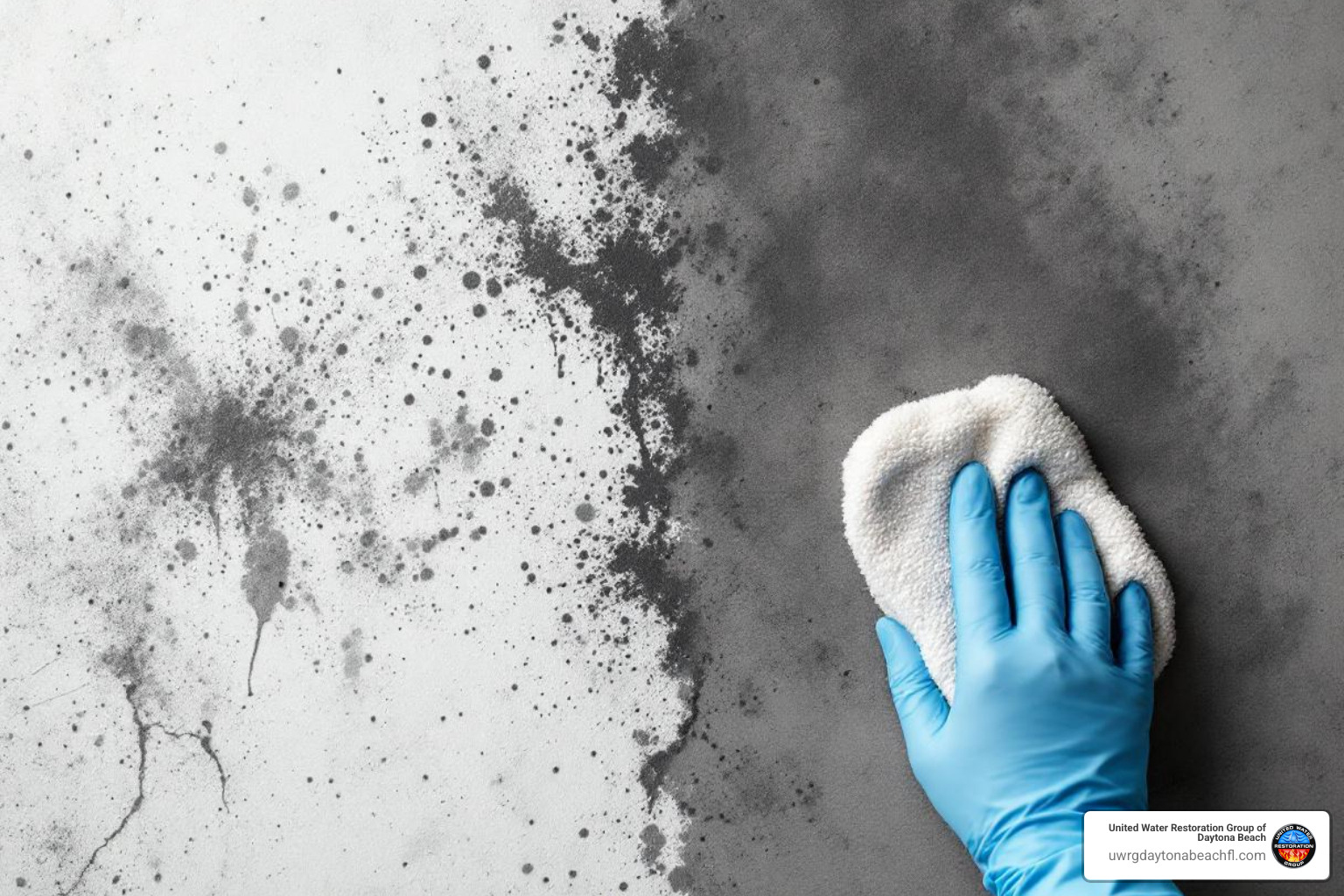
Smoke and soot are the most pervasive forms of fire damage. These residues don’t just sit on surfaces; they penetrate deeply into porous materials like upholstery, carpets, and even drywall, carrying strong, unpleasant odors.
The problem with smoke and soot is their corrosive, acidic nature. Within hours, they can cause irreversible damage:
- Tarnishing metals
- Discoloring plastics
- Etching glass
- Permanently staining porous materials
Left untreated, these effects become permanent. This is why specialized soot removal and cleaning up smoke damage techniques are essential, as outlined in our guide on The Difference Between Smoke and Fire Damage.
Health Hazards for Occupants
Beyond property damage, smoke and soot pose significant health risks. The U.S. Environmental Protection Agency (EPA) notes that inhaling fine particulate matter from smoke can lead to respiratory irritation and worsen conditions like asthma. Soot and dirty water also pose health risks, making professional remediation essential to ensure the property is safe for all occupants, especially vulnerable individuals.
The Role of Water Damage from Firefighting Efforts
Paradoxically, firefighting efforts often introduce another major problem: water damage. The large volume of water used can saturate floors, walls, and belongings, leading to significant secondary damage if not addressed promptly.
Within just 24 to 48 hours, damp conditions create the perfect environment for mold growth. Water can also cause:
- Swelling and warping of wood
- Disintegration of drywall
- Corrosion of metals
- Damage to electrical systems
This is why immediate water damage restoration is a critical component of comprehensive fire damage remediation. Our team uses advanced equipment to detect hidden moisture, ensuring thorough drying to prevent mold and further structural deterioration.
The Professional Fire Damage Remediation Process
When your property in the Daytona Beach, Palm Coast, or Jacksonville, FL area is affected by fire, a professional approach to fire damage remediation is crucial. Our process is designed to return your property to its pre-fire condition, guided by certified technicians and industry-leading standards. The entire process follows the ANSI/IICRC S700 Standard for Professional Fire and Smoke Damage Restoration, which outlines best practices for a safe and thorough recovery.
Step-by-Step Restoration: A Methodical Approach
Our comprehensive fire damage remediation process involves several key stages:
Emergency Contact and Assessment: After your call, we arrive with the right equipment for the situation. We conduct a thorough inspection of all fire, smoke, soot, and water damage, including hidden issues, to develop a customized restoration plan.
Immediate Board-Up and Roof Tarping: To prevent further damage, we secure your property with emergency board-up services and place tarps on damaged roofs. This stabilizes the site and protects your belongings. For more details, see our page on Emergency Tarping & Board Up.
Water Removal and Drying (If Present): Firefighting efforts often leave significant water damage. We use powerful extractors, air movers, and dehumidifiers to thoroughly remove water and dry affected areas, preventing secondary issues like mold. Our team is expert in Water Damage Restoration.
Removal of Smoke and Soot from All Surfaces: In this critical stage, our certified technicians use specialized equipment for effective soot removal from all surfaces. We use HEPA vacuums, negative air machines, and specific cleaning agents to safely lift and remove corrosive particles without causing further damage.
Cleaning, Sanitizing, and Deodorization: We deep clean and sanitize all salvageable items and structures to ensure the property is hygienic. To combat lingering smoke odors that penetrate porous materials and HVAC systems, we use advanced techniques like industrial air scrubbers and thermal fogging to neutralize them completely. For more insight, check out Smoke Smell Removal: How Is It Done?.
Restoration and Repairs: This final stage brings your property back to its pre-fire condition. It can range from minor repairs, like replacing drywall and painting, to major reconstruction, including full structural fire damage repair. Our Fire Damage Repairs services cover everything needed to rebuild your property.
Specialized Techniques and Equipment
We use state-of-the-art tools and techniques to handle any fire damage remediation scenario:
- Thermal Foggers and Ozone Generators: For deep odor penetration and neutralization in textiles and enclosed spaces.
- Hydroxyl Generators: A safe deodorization alternative for occupied spaces or near sensitive materials.
- HEPA Vacuums and Air Scrubbers: High-efficiency particulate air (HEPA) filters capture microscopic soot particles, while air scrubbers purify the air.
- Specialized Cleaning Agents: We use EPA-approved solutions formulated for different types of surfaces and smoke residues.
- Moisture Meters and Infrared Cameras: Crucial for detecting hidden moisture to ensure complete drying and prevent mold.
- Content Cleaning and Restoration: We salvage personal belongings using specialized methods like ultrasonic cleaning to remove soot from delicate items.
By adhering to the highest industry standards and utilizing these advanced techniques, we ensure that every aspect of your fire damage remediation is handled with expertise and care.
DIY vs. Professional Cleanup: Knowing When to Call for Help
After a fire, deciding between DIY cleanup and calling professionals for fire damage remediation is critical. Improper cleanup can cause more damage, health risks, and insurance claim issues. While minor smoke damage might be manageable, most situations require expert intervention.
When is DIY an Option? (Light Smoke Damage)
DIY cleanup may be an option for very light smoke damage with no visible soot and only a faint, localized odor, such as after a minor, quickly extinguished stovetop fire.
Characteristics of Light Smoke Damage:
- Odor only, with no visible soot or ash.
- Damage confined to a very small area.
- No structural or water damage.
Safe DIY Cleaning Tips for Light Smoke:
- Aeration and Ventilation: Open windows and use fans to circulate air.
- Cleaning Hard Surfaces: Wipe non-porous surfaces with a mild detergent.
- Washing Fabrics: Launder washable fabrics like curtains and upholstery covers.
- Odor Absorption: Place bowls of activated charcoal or baking soda in the room to absorb odors. Avoid masking sprays.
Always wear protective gear like gloves and a mask. If you notice any visible soot, a strong odor, or water damage, call the professionals.
Why Professionals are Essential for Moderate to Heavy Fire Damage Remediation
When damage is more than a faint odor in a small area, professional fire damage remediation is essential. DIY cleanup for moderate to heavy damage is unsafe and ineffective.
Characteristics of Moderate to Heavy Smoke Damage:
- Visible soot and ash on multiple surfaces.
- Strong, pervasive smoke odor.
- Structural components affected by heat or flames.
- Water damage from firefighting.
- Contamination of the HVAC system.
Reasons to Call a Professional for Moderate to Heavy Damage:
- Health Risks: Smoke and soot contain toxic chemicals. Professionals use proper Personal Protective Equipment (PPE) like respirators to work safely in contaminated environments.
- Specialized Equipment: Effective remediation requires tools like HEPA vacuums, air scrubbers, and thermal foggers that homeowners don’t have. These are crucial for thorough soot removal and deodorization.
- Hidden Structural Damage: Heat can weaken structural elements. Our experts are trained to identify these hidden issues, and we offer comprehensive structural fire damage repair.
- HVAC System Contamination: Smoke can spread through your HVAC system. Professionals can thoroughly clean and decontaminate it to prevent ongoing air quality issues.
- Water Damage and Mold Prevention: Proper water extraction and drying are critical to prevent mold growth, which can begin within 24-48 hours. This task is best left to experts in water damage restoration.
- Insurance Claim Requirements: Most insurance policies require professional documentation and remediation. Our Professional Fire Damage Cleanup services ensure proper protocols are followed, aiding a smoother insurance process.
The Risks of Improper Cleanup
Attempting to clean moderate to heavy fire damage yourself can lead to severe consequences:
- Permanent Damage: Improper cleaning can embed soot deeper into surfaces, causing permanent staining.
- Lingering Odors: Without specialized techniques, smoke odors can persist indefinitely.
- Unseen Health Hazards: Inadequate cleanup leaves behind microscopic particles that pose health risks.
- Decreased Property Value: A poorly remediated property suffers from lingering odors and discoloration.
- Future Mold Issues: Neglecting thorough drying will likely lead to mold remediation problems.
| Feature | Light Smoke Damage (DIY Possible) | Moderate Smoke Damage (Professional Recommended) | Heavy Smoke Damage (Professional Essential) |
|---|---|---|---|
| Visible Soot | None to very minimal | Visible on some surfaces | Heavy contamination on all surfaces |
| Odor | Faint, localized | Noticeable, pervasive | Strong, acrid, pervasive |
| Area Affected | Small, contained | Multiple rooms, contents | Entire property, structural elements, contents |
| Water Damage | None | Possible, from firefighting | Likely, from firefighting |
| Structural | None | Possible minor heat effects | Compromised elements, extensive charring |
| Health Risk | Low (with basic PPE) | Moderate (respiratory irritation likely) | High (toxic particles, long-term health concerns) |
| Equipment | Basic cleaning supplies, fans | Specialized vacuums, air movers, dehumidifiers | Advanced air scrubbers, thermal foggers, hydroxyls, specialized chemicals |
| Insurance | May not involve claim | Requires detailed documentation | Essential for claim approval and comprehensive restoration |
| Recommended | DIY (with caution) | Professional fire damage remediation | Professional fire damage remediation |
Navigating Recovery: Insurance, Health, and Moving Forward
Arriving at the final stages of fire damage remediation is a significant milestone. This phase involves critical considerations for insurance, long-term health, and emotional well-being as you prepare to move back in.
Working with Your Insurance Company
Navigating a fire loss insurance claim can be daunting. Our role extends beyond physical restoration; we provide comprehensive insurance claim assistance.
- Documentation is Key: We carefully document all damage with notes and photos. We assess contents for restoration vs. replacement, considering factors like cost, damage, and sentimental value. This thorough documentation is crucial for your insurance provider to understand the full scope of the loss.
- Detailed Estimates: We provide accurate, detailed estimates for all necessary fire damage remediation work. Our goal is to streamline the recovery process and ensure proper coverage, working closely with your insurance adjuster.
- Direct Billing and Communication: We can bill your insurance company directly to reduce your stress. Our team maintains open communication with adjusters throughout the process to avoid delays and ensure a smooth claim.
Prompt notification to your insurer and detailed record-keeping are essential for a successful claim.
Long-Term Health and Safety After Fire Damage Remediation
Ensuring the long-term health and safety of your home after remediation is paramount.
- Post-Remediation Verification: Our team conducts thorough checks to confirm that all contaminants have been removed and that the environment is safe. This includes verifying that all moisture has been eliminated to prevent future mold growth, as outlined in guides like the Homeowner’s Guide to Remediation of Residential Smoke Damage.
- Air Quality Testing: For properties with extensive smoke damage or when vulnerable occupants are returning, additional air quality testing may be advisable to ensure no harmful particles remain.
- Structural Integrity Checks: A final assessment of your home’s structural integrity is crucial to verify that all repairs have been made correctly and the building is sound.
- Ensuring Habitability: Our ultimate goal is to return your home to a safe, clean, and habitable condition, free from lingering odors or hidden hazards. We ensure all systems, including HVAC, are properly cleaned and functioning.
The Final Walkthrough and Moving Back In
The final walkthrough is an important step before you move back into your restored property.
- What to Expect: You will tour the property with our project manager to review all completed work and confirm it meets your expectations. We will demonstrate the success of odor and soot removal and provide documentation for your records.
- Post-Restoration Checklist: We’ll provide a checklist to help you settle back in, covering things like utility activation and maintenance tips.
- Emotional and Mental Health Impacts: Recovering from a fire has significant emotional and mental health impacts. It’s a stressful and life-altering event, and we encourage seeking support. Our team approaches every job with compassion, knowing we are helping rebuild your home and your sense of security.
Conclusion
Experiencing a fire is difficult, but you don’t have to face recovery alone. As this guide shows, effective fire damage remediation is a complex process that goes far beyond simple cleanup. From the immediate response to the final reconstruction, every step is critical.
The key takeaways are clear: acting fast is critical to prevent secondary damage, and professional help ensures safety, compliance, and a thorough restoration. Attempting to tackle moderate to heavy fire damage yourself can lead to permanent damage, lingering health risks, and insurance complications.
At United Water Restoration Group of Daytona Beach, we provide comprehensive support for properties throughout the Daytona Beach, Palm Coast, and Jacksonville, FL areas. Our certified technicians use advanced equipment to handle every aspect of fire damage remediation, ensuring your property is returned to its pre-loss condition. We’re available 24/7 for emergencies and are committed to working with you and your insurance provider.
Don’t let the devastation of a fire linger. For immediate assistance and a complete fire damage remediation plan, please contact us today. We’re here to help you rebuild and restore your peace of mind.