


Hail Damaged Siding: Master Your Claim 2026
When Hail Hits Home: Understanding the Threat to Your Siding
Hail damaged siding requires immediate attention to prevent costly structural problems. Here’s what you need to know right away:
Quick Identification Guide:
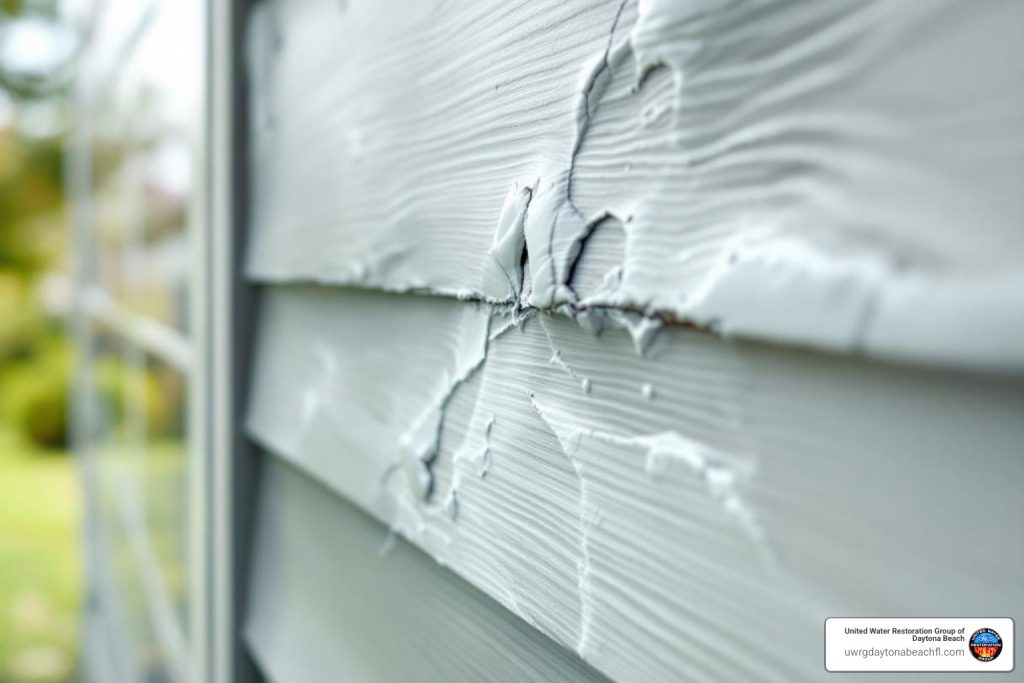
- Vinyl Siding: Look for cracks, chips, holes, or warping
- Wood Siding: Check for dents, splits, and chipped paint
- Metal/Aluminum: Inspect for dents, scratches, and white oxidation marks
- All Types: Document damage with photos and contact your insurance provider within your policy’s time limit
Immediate Actions:
- Inspect your home’s exterior in morning or evening light
- Take detailed photos of all damaged areas
- Review your homeowner’s insurance policy
- Contact a professional contractor for assessment
- File your insurance claim promptly
Hailstorms caused over $10 billion in property damage across the US last year. In Florida, where severe weather strikes frequently, your siding is your home’s first line of defense against the elements. When hail as small as three-quarters of an inch—about the size of a penny—strikes your exterior, it can crack vinyl, dent metal, and split wood. These seemingly minor impacts create openings for water intrusion, leading to mold growth, structural damage, and skyrocketing repair costs if left unaddressed.
The financial stakes are significant. Vinyl siding replacement costs range between $6,150 and $15,900, while wood siding can run $7,000 to $23,000. But ignoring the damage costs even more. Small cracks allow moisture to seep behind your siding, compromising insulation, rotting wood framing, and creating the perfect environment for mold and pests.
Many homeowners miss hail damage entirely. Unlike a broken window or visible roof damage, siding damage can be subtle—especially to the untrained eye. Dents may only be visible in certain lighting conditions. Paint chips might seem cosmetic. But these “minor” issues signal compromised protection that will worsen with every rainstorm.
Understanding the damage scale matters. Hail between 1 and 1.5 inches causes significant damage to most siding materials. When hailstones reach 1.5 to 2 inches or larger, you’re likely facing extensive—and potentially dangerous—structural compromise. Wind speed during the storm amplifies this damage, driving hailstones into your siding with greater force and at angles that maximize impact.
I’m Norbert Vasko, and through my work documenting property damage for restoration campaigns and creating educational content for homeowners, I’ve seen how quickly unaddressed hail damaged siding can escalate from a simple insurance claim to a major structural crisis. This guide will walk you through identifying damage, navigating the insurance process, and restoring your home’s protection.
Spotting the Unseen: How to Identify Hail Damage
After a hailstorm passes through our Florida communities like Daytona Beach, Ormond Beach, or Jacksonville, the first step is always inspection. But how do you spot damage that might not be immediately obvious? We’re here to help you become a hail damage detective.
DIY Inspection Tips:
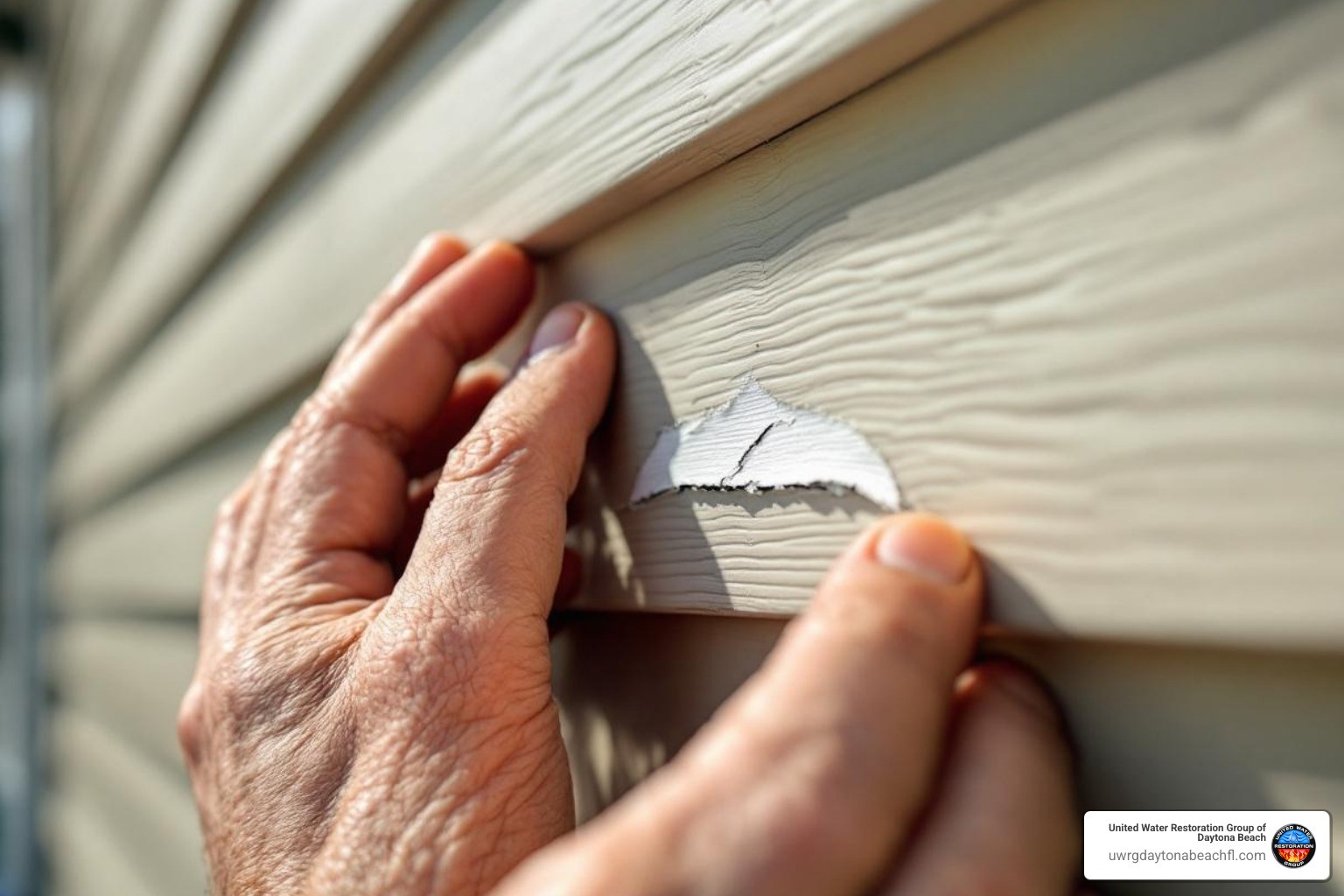
When you’re checking your home for hail damaged siding, timing and technique are everything. We recommend performing your inspection in the early morning or late afternoon. Why then? The low-angle sunlight creates shadows that can highlight subtle dents, cracks, or imperfections that might be invisible in the direct midday sun. Walk around your entire home, taking your time to carefully examine each section of siding. Don’t forget to check all sides of your house, as wind direction during the storm can mean some areas are more affected than others.
Several factors influence the severity of hail damage:
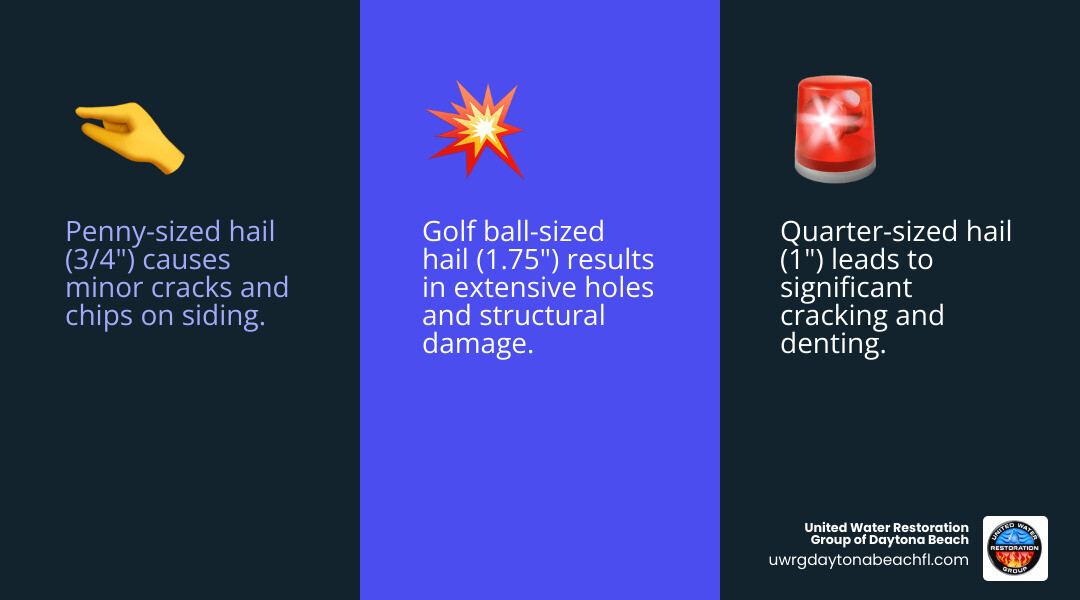
- Hailstone Size: As we saw in the infographic, hail as small as 3/4 inch (penny-sized) can cause damage. When hail reaches 1 inch, you can expect more cracks, chips, and holes. Hail 1 1/4 to 1 1/2 inches will cause significant damage, while 1 1/2 to 2 inches or more can lead to extensive and dangerous damage.
- Wind Speed: High winds can significantly amplify the force of hailstones, driving them into your siding at angles that cause more severe impact. This can turn minor impacts into major problems.
- Siding Age: Older siding materials, especially vinyl, can become brittle over time. This makes them more susceptible to cracking and breaking, even from smaller hailstones.
Understanding what siding hail damage is and its potential impact is crucial. When hailstones strike, they create microscopic, and sometimes invisible, weaknesses that progressively undermine your home’s protective envelope. These impacts aren’t just cosmetic; they compromise the material’s integrity, making it less effective at protecting your home from the elements.
Common Signs of Hail Damaged Siding on Different Materials
Different siding materials react uniquely to hail, so knowing what to look for on your specific type of siding is key to identifying hail damaged siding. According to InterNACHI, different siding materials respond uniquely to hail impact.
- Vinyl Siding Damage: Vinyl is often the most susceptible. Look for cracks (from hairline to larger fractures), chips where pieces of the material have broken off, and holes or puncture marks. You might also notice warping or buckling, especially if the hail was accompanied by strong winds. Older vinyl siding, which can become brittle, is particularly prone to these issues.
- Wood Siding Damage: For wood siding, the primary signs are dents. These can be subtle, so gently running your hand across the surface can help you feel for minor indentations that aren’t immediately visible. Also, look for splits in the wood and chipped or peeling paint, which can indicate impact points. Oxidized wood might be visible through cracks.
- Metal & Aluminum Siding Damage: Metal and aluminum siding typically show damage as dents, which can range from small dimples to more pronounced indentations. A unique sign for aluminum siding is a whitish discoloration, indicating the aluminum oxidizing as a result of the denting. Scratches can also occur, compromising the protective coating. For other metal siding, look for dents or dimples that resemble a golf ball’s surface.
To inspect for hail damage on various siding types, we recommend a thorough, hands-on approach. Start by visually scanning for obvious damage. Then, get up close and personal, feeling for subtle indentations, especially on wood and aluminum. Don’t forget to check corners and edges, as these can be stress points for damage. A garden hose can also help; spraying water on your siding can highlight imperfections by changing how light reflects off the surface.
After the Storm: Your Immediate Action Plan
So, a hailstorm has just passed over your Florida home in places like Deltona, Port Orange, or New Smyrna Beach. Your heart might be racing, and you’re probably wondering what to do next. Don’t panic! Taking the right steps immediately after suspecting hail damaged siding can make all the difference in the repair process and your insurance claim.
1. Safety First: Before you even think about inspecting your property, ensure it’s safe. Check for downed power lines, gas leaks, or structural instability. Your safety and the safety of your family are paramount. If there’s any doubt, call emergency services.
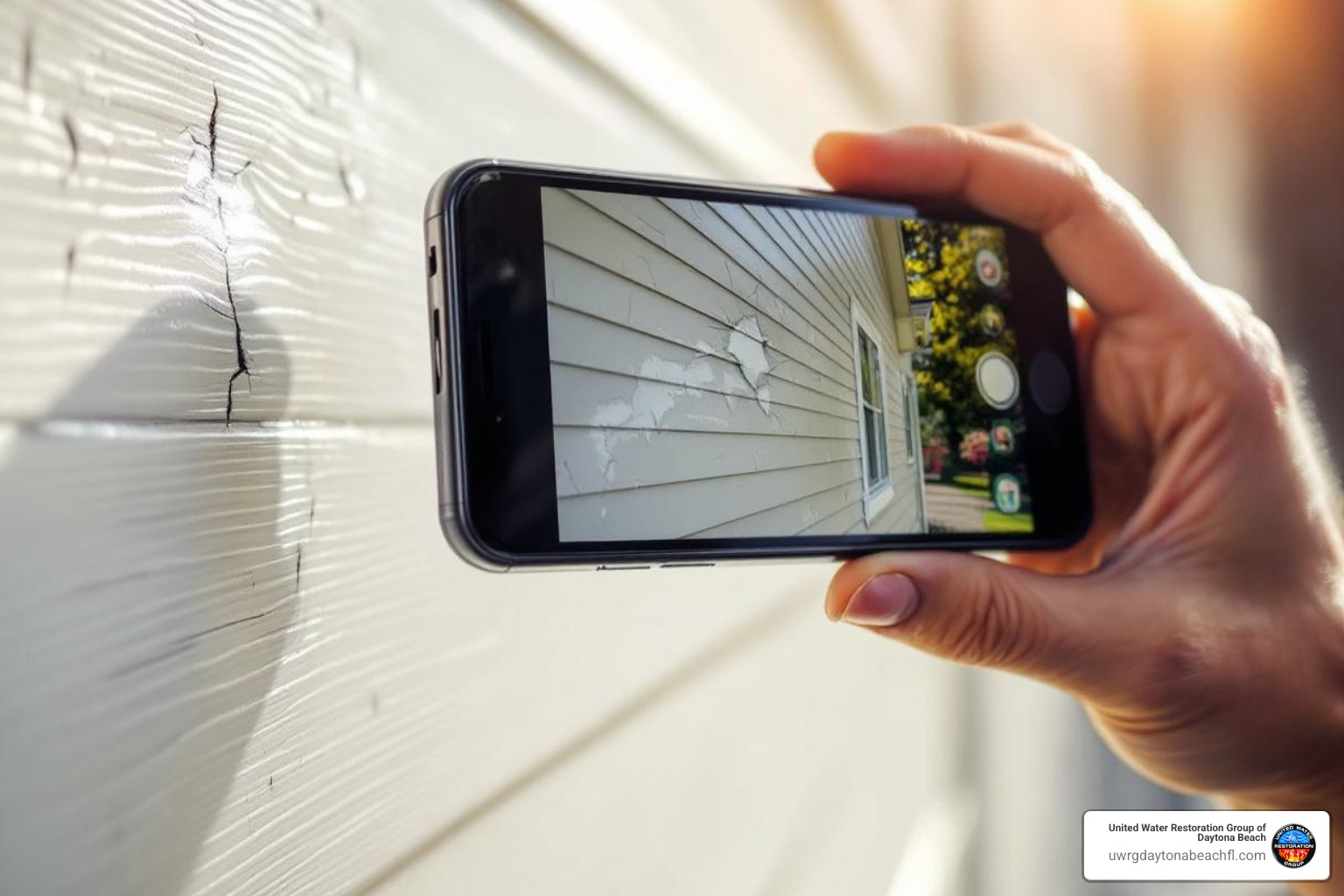
2. Documenting the Damage: This is perhaps the most critical step. As soon as it’s safe, grab your smartphone or a camera and start documenting everything.
- Taking Photos and Videos: Get wide shots of your home showing the overall impact, then zoom in for close-ups of specific damage points on your siding. Take multiple angles of each damaged area. Don’t forget to include photos of any hailstones you find, especially if they are unusually large. The more evidence you have, the stronger your case will be for your insurance claim.
- Written Notes: Jot down the date and time of the storm, the approximate size of the hailstones, and a detailed description of the damage you observe.
3. Finding a Reputable Contractor: While you might be tempted to call your insurance company first, we often recommend contacting a qualified storm damage contractor in your area first. They can provide an expert assessment of the damage, which can be invaluable when dealing with your insurer. Look for contractors with experience in hail damage repair and a good reputation in our local Florida communities.
4. Reviewing Your Insurance Policy: Dig out your homeowner’s insurance policy and familiarize yourself with your coverage for hail and storm damage. Pay close attention to your deductible, any specific clauses about storm damage, and the timeframe within which you must file a claim. Most homeowner’s insurance policies cover damage caused by hail, but it’s always best to be informed.
5. List of Essential Documents for Your Claim:
- Your insurance policy number and contact information for your agent.
- Date and time of the hailstorm.
- Detailed photos and videos of all hail damaged siding and any other property damage.
- Written notes detailing observations.
- Any estimates from reputable contractors (if obtained before contacting insurance).
- Receipts for temporary repairs (e.g., tarps).
Filing Your Claim and Getting Professional Help
Once you have your documentation and a clear understanding of your policy, it’s time to contact your insurance provider. Be prepared to provide all the information you’ve gathered. They will likely assign an adjuster to assess the damage.
Scheduling an Adjuster Meeting: When the adjuster comes out, it’s highly beneficial to have your chosen contractor present. A professional contractor can point out subtle damage that an adjuster might miss, ensuring all damage is properly documented and included in the claim. This collaborative approach can streamline the process and ensure you get a fair assessment.
The Importance of a Professional Assessment: As United Water Restoration Group of Daytona Beach, we emphasize the importance of professional assessment. Our certified technicians are experienced in identifying all types of storm damage, including the often-hidden issues associated with hail damaged siding. We can help you understand the full extent of the damage, which might include underlying structural problems or potential for moisture intrusion that isn’t immediately visible.
Insurance Claim Assistance: Navigating insurance claims can be complex and frustrating. We understand this, which is why we offer comprehensive Insurance Claim Assistance to our clients. We work directly with your insurance company, providing the necessary documentation and advocating on your behalf to ensure a smooth and fair settlement. Learn more about Navigating Insurance Restoration Claims.
Preventing Further Damage & Temporary Repairs: While waiting for repairs, it’s crucial to prevent further damage. If your siding has holes or significant cracks, temporary measures like covering the damaged areas with tarps or plastic sheeting can prevent water from entering your home. These temporary repairs can be simple but effective in mitigating additional issues like water damage or mold growth. Remember to keep receipts for any materials used for temporary fixes, as these costs may be reimbursable by your insurance.
The Hidden Dangers: Why You Can’t Ignore Damaged Siding
It’s easy to dismiss minor dents or cracks in your siding as cosmetic imperfections. After all, your home still looks fine from a distance, right? Wrong. Ignoring hail damaged siding is like ignoring a small leak in a boat – eventually, you’ll be swimming in problems. The Federal Alliance for Safe Homes (FLASH) emphasizes that homeowners who ignore initial hail damage may face much more expensive repairs or even structural compromise down the line.
Structural Integrity Risks: Your siding is more than just a pretty face; it’s a critical component of your home’s structural integrity. When hail compromises its surface, it creates vulnerabilities that can lead to a cascade of problems.
- Water Intrusion: The most immediate and dangerous consequence. Even tiny cracks or holes become entry points for rainwater. Once water gets behind the siding, it can soak into the sheathing, insulation, and even the wooden framework of your home.
- Vulnerability to Water Damage: This isn’t just about a damp wall. Prolonged moisture exposure can lead to wood rot, weakening the structural components of your home. This is particularly concerning in humid Florida climates, where moisture can quickly cause extensive damage.
- Mold and Mildew Growth: Where there’s moisture, there’s often mold. Mold and mildew thrive in damp, dark environments behind your walls. Not only can mold cause significant property damage, but it can also pose serious health risks to your family.
- Pest Infestation: Damaged siding creates easy access points for pests like insects, rodents, and even larger critters. Once inside, they can cause further damage, contaminate your living space, and be incredibly difficult to remove.
- Decreased Property Value: Unaddressed damage signals neglect to potential buyers, significantly reducing your home’s perceived and actual value. Who wants to buy a house with hidden water damage?
- Higher Energy Bills: Compromised siding can also mean compromised insulation. Gaps and cracks allow conditioned air to escape and outside air to enter, making your HVAC system work harder and driving up your utility bills.
The long-term consequences of unaddressed hail damaged siding are far more severe than the initial cost of repairs.
Long-Term Financial and Structural Consequences
The impacts of ignoring hail damaged siding are not just immediate; they compound over time, leading to exponentially greater financial burdens and structural issues.
- Progressive Material Deterioration: Small cracks expand, minor dents become rust spots, and compromised areas continue to degrade with each passing storm and season. The siding material itself breaks down, losing its protective qualities.
- Compromised Insulation: As water infiltrates behind the siding, it can saturate and destroy your home’s insulation. This not only leads to higher energy bills but also creates a damp environment conducive to mold and rot.
- Potential for Wood Rot: Once moisture reaches the wooden framing or sheathing of your home, wood rot can set in. This is a severe structural issue that can compromise the integrity of your walls, floors, and even your roof. According to the North Dakota State University Extension, these damages can lead to critical structural vulnerabilities that compromise the building’s fundamental integrity.
- Exponentially Increasing Repair Costs Over Time: What might have been a simple siding repair initially can quickly escalate into a complex project involving mold remediation, structural repairs, and extensive Water Damage Restoration. The average cost of replacing or installing new siding is $11,520, but this can skyrocket if you’re also dealing with internal damage. The Federal Alliance for Safe Homes emphasizes that homeowners who ignore initial hail damage may face much more expensive repairs or even structural compromise.
- Water Damage Restoration Considerations: If water has penetrated your home, you’ll need specialized services to dry out the affected areas, prevent mold, and restore your property. At United Water Restoration Group of Daytona Beach, we specialize in comprehensive Residential Restoration Services and Reconstruction After Loss, ensuring your home is not just repaired, but fully restored.
In short, delaying repairs for hail damaged siding is a false economy. It will cost you more in the long run, both in terms of money and the peace of mind that comes from a safe, secure home.
Repair, Replace, and Recoup: Your Guide to Hail Damaged Siding
Once you’ve identified and documented hail damaged siding, the big question arises: should you repair it or replace it entirely? This decision depends on several factors, including the extent of the damage, the age of your siding, and the availability of matching materials.
| Factor | Repairing Siding | Replacing Siding |
|---|---|---|
| Damage Extent | Minor, isolated dents, cracks, or holes on a few panels | Widespread damage, significant structural compromise, or matching issues |
| Siding Age | Newer siding (less than 10-15 years old) where matching is easy | Older siding (20+ years) nearing end of lifespan, or if significant brittle-ness/wear is present |
| Material Availability | Readily available matching panels or sections | Discontinued styles, severe color fading, or if upgrading to a more durable material |
| Cost | Generally lower initial cost for small sections | Higher upfront investment, but can offer long-term savings in maintenance and energy efficiency |
| Insurance | Often covered for localized damage | May be covered for full replacement if damage is extensive or matching is impossible (e.g., with an endorsement) |
| Long-Term Value | Maintains current aesthetic and protection | Improves curb appeal, increases home value, and provides superior protection with modern materials |
Siding Material Options & Hail-Resistant Materials:
When considering replacement, especially if you’re in a hail-prone area of Florida, choosing the right material can save you headaches down the line. Some materials are inherently more resistant to hail.
- Fiber Cement: This material consistently ranks as one of the best for resisting hail damage. Composed of sand, cement, water, and cellulose fibers, fiber cement siding is incredibly durable. It can last up to 50 years and is highly resistant to impacts, moisture, and pests. Engineered wood and fiber cement siding replacement costs can range between $5,400 and $20,000, offering excellent long-term value.
- Engineered Wood: Some brands of engineered wood siding are designed to withstand significant hail impacts, with some capable of resisting hail as big as 1 3/4 inches without marks. It offers the look of natural wood with improved durability.
Conversely, vinyl and aluminum siding are generally more susceptible to hail damage. Vinyl can crack or break, while aluminum is prone to denting. If you’re replacing these materials, consider upgrading for better hail resistance.
Cost Considerations: The cost of addressing hail damaged siding varies widely depending on the material, extent of damage, and whether you repair or replace.
- Vinyl siding replacement costs can range between $6,150 and $15,900.
- Wood siding replacement costs can range between $7,000 and $23,000.
- The average cost of replacing or installing new siding is $11,520 nationwide.
These figures highlight why a thorough assessment and understanding of your options are essential.
The Insurance Claim Process for Hail Damaged Siding
Navigating insurance claims for hail damaged siding can feel overwhelming, but we’re here to simplify it for you. Our team at United Water Restoration Group of Daytona Beach has experience in Insurance Claim Assistance and Navigating Insurance Restoration Claims.
Understanding Your Coverage: Most homeowner’s insurance policies cover storm damage, including hail. However, it’s crucial to understand the nuances:
- Actual Cash Value (ACV) vs. Replacement Cost Value (RCV): ACV policies pay out the depreciated value of your siding, meaning you receive less than the cost of new materials. RCV policies, on the other hand, cover the cost of replacing the damaged property with new materials of similar kind and quality. Always aim for RCV coverage if possible.
- Endorsements: Some policies have special endorsements that might cover the full replacement of your home’s siding, even if only one section is damaged, particularly if matching materials are unavailable.
Working with Adjusters: As mentioned earlier, having a professional contractor present during the adjuster’s inspection can be incredibly beneficial. They can ensure all damage is identified and accurately documented. Be prepared to provide all your documentation: photos, videos, and any estimates you’ve received.
What to Do if Your Claim is Denied: If your claim is denied or the payout seems insufficient, don’t give up.
- Review the denial letter: Understand the specific reasons for the denial.
- Gather more evidence: Perhaps a more detailed inspection by an independent expert can reveal hidden damage.
- Appeal the decision: You have the right to appeal. Your contractor or a public adjuster can help you gather additional documentation and present a stronger case.
- Seek professional help: Our team can assist in re-evaluating your claim and communicating with your insurance provider.
Our goal is to help you get the fair compensation you deserve to perform necessary Repair & Rebuild Services for your hail damaged siding.
Frequently Asked Questions about Hail Damaged Siding
We understand you have questions, and we’re here to provide clear, straightforward answers about hail damaged siding and the restoration process.
Will filing a hail damage claim increase my insurance premium?
This is a common concern for homeowners. Generally, filing a claim for weather-related damage, such as hail, is considered an “act of God” and typically does not directly increase your individual premium in the same way an at-fault liability claim might. However, if there’s a widespread pattern of claims in your geographic area (like our Florida communities experiencing frequent hailstorms), the overall premiums for everyone in that area might see an increase to cover the increased risk. It’s always best to discuss this concern directly with your insurance agent.
How long do I have to file an insurance claim after a hailstorm?
The timeframe to file an insurance claim for hail damaged siding can vary depending on your specific insurance policy and state regulations. Most policies have a “statute of limitations” or a set period (often one year, but sometimes longer) from the date of loss. However, we strongly recommend filing your claim as soon as possible after finding the damage. Delays can complicate your claim and make it harder to prove the damage was caused by a specific storm. Plus, prompt action prevents further damage and ensures your home is protected.
Can the insurance company require you to use a specific contractor?
No, in most cases, your insurance company cannot legally require you to use a specific contractor for repairs. You have the right to choose your own contractor. While an insurance company might recommend preferred vendors, the final decision is yours. We encourage homeowners to choose a reputable, local contractor with experience in storm damage restoration, like United Water Restoration Group of Daytona Beach, who will work for your best interests, not just the insurance company’s. We pride ourselves on transparent communication and quality workmanship.
Restore Your Home’s First Line of Defense
We’ve covered a lot of ground today, from spotting the subtle signs of hail damaged siding to navigating the often-tricky waters of insurance claims. Let’s recap the key takeaways:
- Inspect: After any hailstorm in our Florida communities, conduct a thorough inspection of your siding, paying close attention to different material types and using optimal lighting to spot hidden damage. Hail as small as a penny can cause harm.
- Document: Take extensive photos and videos of all damage. This visual evidence is your strongest asset when filing an insurance claim.
- Act Quickly: Do not delay. Unaddressed hail damage can lead to a cascade of problems, including water intrusion, mold growth, structural compromise, and significantly higher repair costs down the line.
The importance of professional restoration cannot be overstated. When your home’s exterior protection is compromised, you need experts who understand the intricacies of storm damage and can provide comprehensive, reliable solutions. United Water Restoration Group of Daytona Beach offers 24/7 emergency restoration services, and our certified technicians are equipped to handle everything from initial assessment to complete Repair & Rebuild Services. We’re committed to protecting your investment and restoring your home’s safety and curb appeal.
Don’t let hail damaged siding turn into a homeowner’s nightmare. We’re here to help you through every step of the process, ensuring your home in Daytona Beach, Ormond Beach, Bunnell, Debary, Deland, Deltona, Edgewater, New Smyrna Beach, Orange City, Palm Coast, Port Orange, or Jacksonville is swiftly and effectively restored.
Contact us for professional Storm Damage Restoration Services.